
Muscle Rexlant
Showing the single result
-
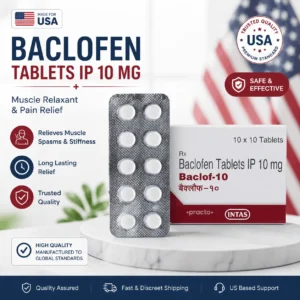 Price range: $44.00 through $110.00 Select options This product has multiple variants. The options may be chosen on the product page
Showing the single result
Muscle Rexlant
Doctors prescribe muscle relaxers to help control muscle contraction (tightening) and ease the pain and discomfort that come from muscle cramps and spasticity (stiffness).
Medication that relaxes muscles temporarily eases the pain that comes from tense or spasming muscles and makes daily tasks easier.
It is the third most common reason for doctors to prescribe muscle relaxers for low back pain.
Muscle relaxers can be broken down into two groups. Antispasmodics stop spasms by blocking signals in the brain. Antispastics, on the other hand, work on the spinal cord to stop muscle tightness and spasms.
Muscle relaxers are given when muscle spasms or stiffness causes serious pain, discomfort, and/or the inability to do things. The following things determine whether or not to recommend a muscle relaxer:
- In cases where over-the-counter (OTC) and non-drug treatments like physical therapy, stretching, or heat therapy don’t work.
- To avoid muscle spasms or stiffness and possible injury after spine surgery or during physical therapy.
- Along with over-the-counter painkillers, rest, physical therapy, and other non-drug treatments can help ease pain and improve function.
Most treatments only last a short time (2–3 weeks).
Antispasmodics
Below, find information about antispasmodics in a table:
| Drug | Brand name | Form | Dosage |
|---|---|---|---|
| Diazepam | Valium | Tablet or injection | 2 mg to 10 mg three or four times a day (tablet), or 5 mg to 10 mg (injection) |
| Carisoprodol | Soma | Tablet | 250 mg to 350 mg three times a day |
| Cyclobenzaprine | Flexeril | Tablet | 5 mg to 7.5 mg three times a day (tablet), or 15 mg to 30 mg once a day (extended-release capsule) |
| Metaxalone | Skelaxin | Capsule | 800 mg three to four times a day |
| Methocarbamol | Robaxin | Tablet | Varies depending on the severity of muscle pain |
Skeletal muscle relaxants are a group of drugs that include some of the ones listed above. These change how the central nervous system works to stop muscles from contracting.
Diazepam
Benzodiazepines are what Diazepam is. Doctors can prescribe Diazepam for people who have extreme muscle spasms or spasticity caused by neurological disorders. In the US, this drug is often sold under the brand name Valium.
Doctors may suggest diazepam tablets or injections.
How Much to Take
Two to ten milligrams (mg) should be taken by mouth three or four times a day.
If someone needs diazepam shots, the doctor may give them an IV dose of 5 mg to 10 mg at first, and then another dose 3 to 4 hours later.
Effects on the sides of Diazepam
Some of the most common side effects of Diazepam are:
- Feeling sleepy or tired
- Having weak muscles
- Loss of movement in muscles
If someone takes this drug along with an opioid, they could become very sleepy or sedated. Taking a benzodiazepine and an opioid together can also cause breathing problems, coma, and even death.
Carisoprodol or Soma 350mg
Adults can take carisoprodol to ease the pain of sudden muscle problems. In the United States, this drug is often sold under the brand name Soma.
Doctors can only give it to patients for two or three weeks at a time. There is not enough proof that it works for longer periods of time.
How Much to Take
You should take 250 mg to 300 mg three times a day and before bed.
Effects on the sides of Soma
The side effects of carisoprodol that happen most often are:
- Sleepiness, dizziness, and a headache
A common side effect is feeling sleepy, which can make it hard to drive or operate machinery.
Doctors also tell people that taking this medicine with alcohol is not a good idea. Also, there is a chance of becoming dependent on carisoprodol.
Cyclobenzaprine
When taken with rest and physical treatment, cyclobenzaprine can help people with acute muscle conditions who are having muscle spasms. In the United States, this drug is sold under the brand names Flexeril, Amrix, and Fexmid. You can take clobenzaprine by mouth in two different forms: immediate-release pills and extended-release capsules.
How Much to Take
Doctors generally prescribe 5 mg three times a day.
But some people need bigger doses, like 7.5 to 10.0 mg three times a day. The most that can be taken in a day is 30 mg.
People who take the extended-release Form should do so every day at the same time.
Effects on sides Cyclobenzaprine 10 mg
Cyclobenzaprine’s most common side effects are the following:
- Feeling dizzy, mouth dry
- Tiredness, headaches, anger, and confusion
Cyclobenzaprine should not be taken by people who are already taking medicines that affect serotonin because it can raise the risk of getting serotonin syndrome, a condition that can be life-threatening.
Metaxalone
For painful muscle problems, doctors Pescribed taking metaxalone along with rest, physical therapy, and other non-drug methods of treatment. This drug is sold under the brand name Skelaxin in the US.
How Much to Take
Three to four times a day, 800 mg is the right amount for people over 12 years old.
Effects on sides of Metaxalone
When people take metaxalone, they might:
- Drowsiness, dizziness, headaches, and anger
- Have an upset stomach
Because of the chance of serotonin syndrome, it can’t be taken with medicines that change the amount of serotonin in the body.
Methocarbamol
In the United States, Methocarbamol is often sold under the brand name Robaxin.
Most people take this drug by mouth, but doctors can also give you IV or injectable forms.
How Much to Take Methocarbamol
If the doctor gives you 500 mg tablets, they may tell you to take three at first and then two to keep the effect going. If they give 750-mg tablets, they might tell you to take two at first and then one or two more to keep the effect going.
The guidelines say to take 6 grams a day for the first 48 to 72 hours of treatment, but if the problem is really bad, a doctor may tell you to take 8 grams during this time.
After that, most doctors will tell you to lower the dose to about 4 grams a day.
Antispastics
Medicines that treat spasticity work on either the spinal cord or muscle cells. Multiple sclerosis (MS) and conditions that cause spasms, like cerebral palsy, can be helped by these drugs. They can also help with spinal cord injuries.
Information about antispastic medications:
| Drug | Brand name | Form | Dosage |
|---|---|---|---|
| Baclofen | Lioresal | Tablet, intrathecal injection | 5 mg or 50 mcg as an initial dose, adjusted after 24 hours if needed |
| Dantrolene | Dantrium | Tablet, injection | 25 mg once daily, increased by 25 mg until an effective dose is reached. The maximum is 400 mg per day |
| Tizanidine | Zanaflex | Capsule, tablet | 2 mg, 4 mg, or 6 mg (capsules), or 2 or 4 mg (tablets) every 6–8 hours |
Baclofen 10mg
According to the Food and Drug Administration (FDA), baclofen can help people with this condition:
- Leg muscle spasms
- Clonus spinal cord damage
- MS
Doctors may suggest taking baclofen by mouth or putting it into a vein. In this case, the drug is injected into the spinal canal.
In the United States, this drug is sold under the brand name Lioresal.
Most doctors say that you should take five mg pills three times a day. You can take up to 80 mg by mouth every day.
A single amount of 50 micrograms (mcg) is given to someone who needs an intrathecal injection. When the treatment starts to work, the doctor will change the dose if needed.
Effects on the sides of Baclofen
The side effects of baclofen that happen most often are:
- Feeling sleepy or confused
- Having weak muscles
- Dizziness
- Sickness
Dantrolene
Muscle stiffness can be eased with dantrolene. In the US, this is sold under the brands Dantrium, Revonto, and Ryanodex.
How Much to Take
Doctors may give 25 mg of dantrolene every day for 7 days to treat muscle stiffness.
Then, if the person responds well, they may increase the dose. The most that can be taken in a day is 400 mg.
You can also get IV dantrolene.
Effects on sides
One of the side effects of IV dantrolene is changes in breathing that happen because the muscles that control breathing become weak.
Dantrolene taken by mouth could hurt the liver.
Tizanidine or Zanaflex
Tizanidine can help with both spasticity and muscle spasms. It helps people with MS or spinal cord injuries who have spasticity move around better.
In the US, this medicine is sold under the brand name Zanaflex.
How Much to Take
2 mg, 4 mg, or 6 mg capsules may be prescribed by doctors. They may also give you 2 mg or 4 mg pills. It is possible to take tizanidine as often as every 6 to 8 hours.
Effects on sides
Most people can handle tizanidine well.
Some people say:
- Itching, feeling sleepy
- Feeling dizzy and weak
- Toothache
- Gas and bloating
- Hay fever
- Urinating a lot and having trouble seeing
- Having low blood pressure, hallucinations, and a slow heart rate
Spasticity medications that are designated as off-label
Some drugs can be used to treat spasticity even though the U.S. Food and Drug Administration (FDA) has not approved them for that purpose. Off-label drug use is the term for this.
Even though these medicines aren’t actual muscle relaxants, they can still help people who have spasticity.
Benzodiazepines
Benzodiazepines help relax muscles and make you sleepy. They work by making some neurotransmitters work better. Neurotransmitters are chemicals that help brain cells talk to each other.
Here are some examples of benzodiazepines:
- Klonopin is clonazepam
- Lorazepam (Xanax) and alprazolam (Ativan)
Benzodiazepines can make you sleepy and cause problems with your memory and balance. This kind of drug use can also turn into a habit.
Gabapentin
Neurontin, which is made of gabapentin, is an anticonvulsant drug that is often used to treat seizures. It might also help stop the pain responses that come with spasticity. There are both brand-name and generic versions of gabapentin.
Muscle spasm over-the-counter medicines
Over-the-counter medicines should be the first thing you try if you have muscle spasms because of things like acute lower back pain or stress headaches. It means you should try over-the-counter medicines before you get prescription drugs.
Nonsteroidal anti-inflammatory drugs (NSAIDs), paracetamol, or a mix of the two can be bought over-the-counter. A chemist or doctor can help you pick out an over-the-counter medicine.
Frequently Asked Questions
Are muscle relaxers available without a prescription?
No, you can’t just take muscle relaxers without a prescription. Acetaminophen (Tylenol) and ibuprofen (Advil, Motrin) are two over-the-counter (OTC) pain killers that work better than muscle relaxants alone for neck and back pain. It might help some people to take an over-the-counter painkiller and a muscle relaxer at the same time, especially at night.
Do muscle relaxants have an addictive quality?
Like carisoprodol, some muscle relaxers can be hard to stop taking. These treatments aren’t always the best choice for people with back and neck pain. There are different kinds of proof about how well they work because most people get better over time, no matter what treatment they get. If you’re worried that your treatment might turn into a habit, talk to your doctor about your other options.
Are muscle relaxants causing you to feel drowsy?
Muscle relaxants can indeed put you to sleep. In fact, one of the most common side effects that people report is feeling sleepy. People also often report feeling dizzy and sleepy. Because of this, this kind of medicine generally comes with a warning label that tells you not to do certain things while you’re taking it, like driving, taking care of children, or operating heavy machinery.
Is it safe to take muscle relaxants?
It will depend on your needs since some types can make you dependent on them. Some of them might also not work well with other drugs and alcohol. Always talk to your doctor about the pros and cons of a muscle relaxer, and carefully follow any advice they give you.
What are the five most effective muscle relaxants?
Your choices will rely on your needs and other factors, but here are five drugs that are often prescribed:
This list includes baclofen (Lioresal), dantrolene (Dantrium), carisoprodol (Soma), chlorzoxazone (Lorzon), and methocarbamol (Robaxin).